Key Points
- However, Opinium research conducted recently shows that the London population worries a lot about the use of facial recognition technology (FRT) by police forces.
- While 70% of London population approves the use of FRT by police forces in general, 72% believes that people should be given the opportunity to have a say on the issue.
- Main concerns include possible mistakes (70%), absence of transparency concerning the storage of data (62%) and racial discrimination (50%).
- According to BTP, there have been no cases of arrest of the most wanted criminals during a six-month-long test conducted at underground stations in London.
- The Green Party and some civil rights activists call for quick and strong measures concerning regulation of this technology in order to avoid “overreach and abuse”.
- It was reported that Met Police intends to increase the number of fixed facial recognition cameras in London West End and Soho areas.
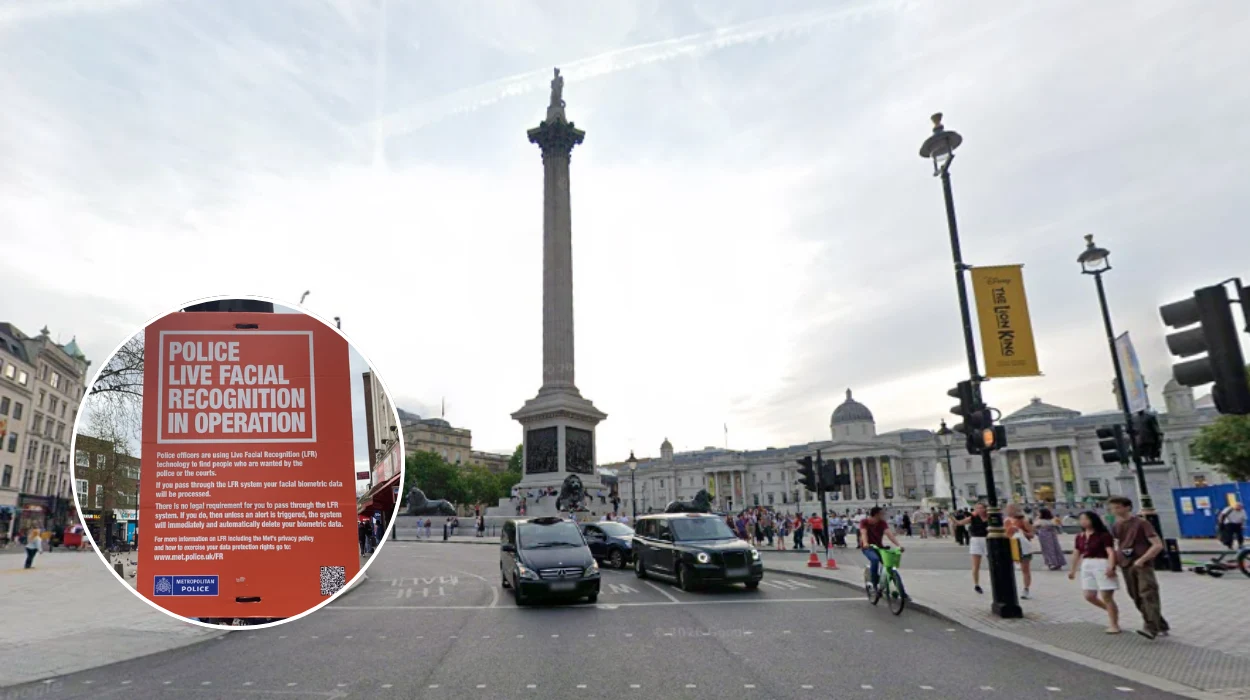
London (Extra London News) August 18, 2026 — Londoners are increasingly apprehensive about the ongoing rollout of facial recognition technology (FRT) across the capital, citing significant fears regarding privacy, potential technological errors, and the scope of surveillance. Although a majority of residents maintain support for the use of such tools by law enforcement, recent polling indicates a clear demand for more rigorous public consultation and stronger regulatory safeguards.
Why are Londoners concerned about the use of facial recognition?
As reported by Kumail Jaffer, Local Democracy Reporter for the Barnet Post, the deployment of Live Facial Recognition (LFR) cameras at London Underground stations has brought the debate surrounding digital surveillance into sharp focus. The polling, conducted by Opinium earlier this year, highlights that public support for the technology is conditional. While 70% of Londoners approve of police using facial recognition, more than half of those surveyed insisted that it should only be deployed where there is a clear, demonstrable public benefit and robust safeguards in place.
Specific anxieties persist among the public. According to the data reported by Jaffer, approximately 72% of respondents believe the public must have a say in how FRT is utilized. Two-thirds of those surveyed expressed worry that technical errors could lead to innocent individuals being unfairly targeted or harassed, while 62% voiced concerns about the storage and security of biometric images. Furthermore, half of the participants highlighted the risk of racial bias inherent in the system.
How does the industry view these public concerns?
Tony Kounnis, CEO of Face Int, the organization that commissioned the research, suggests that the situation is far more complex than a binary debate between supporters and opponents. As reported by Kumail Jaffer of the Barnet Post, Kounnis stated:
“It’s far too simplistic to say that people in London are for or against facial recognition. This research shows that it’s far more nuanced than that – people have specific and understandable concerns, particularly the accuracy of the technology, their own privacy, and the security of biometric data.”
Kounnis further emphasized the necessity of maintaining social license, noting: “Public trust cannot be overlooked; nor is the efficacy of the technology enough. Organisations deploying FRT need to be transparent about how the technology is used, clear about the safeguards in place and willing to recognise that people expect a consultation in how facial recognition is deployed.”
Why has the British Transport Police trial faced criticism?
The British Transport Police (BTP) has been running a trial of the technology for six months at various railway stations, beginning at Victoria Underground Station in February. However, the BTP has admitted that the trial has not resulted in the apprehension of any serious offenders via the technology.
In comments reported by the Barnet Post, a BTP spokesperson explained that the lack of direct hits is due to a “deliberately high” threshold set to prioritise accuracy and minimize misidentification. The spokesperson added that while the LFR has not led to specific arrests, the overall presence of officers and the wider policing operations at stations—which included 13 arrests for offences such as theft and breach of criminal behaviour orders—have contributed to a reduction in crime. The BTP maintains that images of people who do not match the authorized, high-harm watchlist are automatically and immediately deleted.
Explore more Police News:
Police Intervene as Swimmers Invade Hampstead Heath Wildlife Pond: London 2026
Boy Drowns in Millwall Outer Dock, East London 2026
What do political and civil rights groups demand?
Critics are calling for an immediate halt to the expansion of these systems until a regulatory framework is firmly established. Benali Hamdache, a Green Party member of the London Assembly, warned that the absence of strict regulation poses a threat to civil liberties.
As reported by Kumail Jaffer for the Barnet Post, Hamdache told the Local Democracy Reporting Service (LDRS) that the Metropolitan Police (Met) and BTP must implement stronger protections to avoid “overreach and abuse.” He stated:
“Live facial recognition is an invasive tool that allows the police to monitor our daily lives entirely unregulated and without any safeguards in place. With instances of misidentification and a lack of transparency surrounding how data is used, it’s clear that proper oversight is urgently needed. The continued expansion of this technology despite these concerns sets a dangerous precedent for the future.”
This sentiment was echoed by Jasleen Chaggar, senior legal and policy officer at Big Brother Watch. Reporting for the Barnet Post, Jaffer quoted Chaggar as saying:
“It’s unsurprising that the vast majority of people oppose being treated like guinea pigs by police forces that have been experimenting with facial recognition on the public, without their say, for more than a decade.”
Chaggar further criticized the human cost of the technology, noting:
“Londoners understand the risks of error-prone AI. They can put themselves in the shoes of someone who is falsely flagged by a machine, then accused and questioned by the police and forced to prove their innocence. The majority of people recognise facial recognition for what it is: Orwellian mass surveillance technology that turns the public into walking ID cards, as they go about their daily lives.”
Chaggar concluded by urging government action, stating:
“The government must adopt the safeguarding proposals we have set out to the Home Office and allow the public to have a genuine democratic debate about if, and how, this intrusive tech can be used.”
What is the future of facial recognition in London?
The deployment of this technology is expected to widen. The Metropolitan Police is reportedly planning to install static LFR cameras in London’s Soho and West End areas, citing high crime rates. Furthermore, Mayor of London Sir Sadiq Khan reportedly signaled approval for the use of such technology on Oxford Street during a recent City Hall session.
In response to these developments, a spokesperson for the Mayor told the LDRS that Sir Sadiq Khan remains committed to transparency.
“The mayor is committed to ensuring that police are open and transparent around where, when, why and how live facial recognition technology is used in London,”
the spokesperson stated, as reported by the Barnet Post.
“His Office for Policing and Crime will continue to scrutinise and oversee its use to ensure there’s trust and confidence in policing, as we continue to build a safer London for everyone.”