London’s streets could soon become a testing ground for a major transport revolution, but Mayor Sadiq Khan wants the government to slow down before driverless taxis take over the capital’s roads.
Khan has called for limits on the number of robotaxis operating in London, warning that an uncontrolled expansion could increase congestion, affect air quality and threaten the livelihoods of thousands of private-hire and black-cab drivers. His intervention comes as several technology and ride-hailing companies accelerate plans to introduce autonomous vehicles in the UK capital. With commercial driverless taxi services potentially moving closer to reality in 2027, the debate is increasingly shifting from technological innovation to public safety, employment and who should control London’s transport network.
Speaking to The Guardian in an interview published on 1 November, Khan questioned whether existing regulations were adequate to manage the rapid development of autonomous vehicles.
“What we don’t want is a situation where there’s a big bang without proper regulation in place,” he said, stressing the need for an incremental approach before any large-scale rollout.
A race to put driverless taxis on London’s roads
The competition to introduce robotaxis in London is gathering momentum. In September 2026, Uber and British autonomous-driving company Wayve began offering limited passenger journeys in self-driving vehicles, initially with a human safety driver behind the wheel.
Meanwhile, Freenow by Lyft and Chinese technology company Baidu have been testing Baidu’s Apollo Go RT6 vehicles in the borough of Brent. Around 24 autonomous vehicles are currently involved in the testing programme, which began in July.
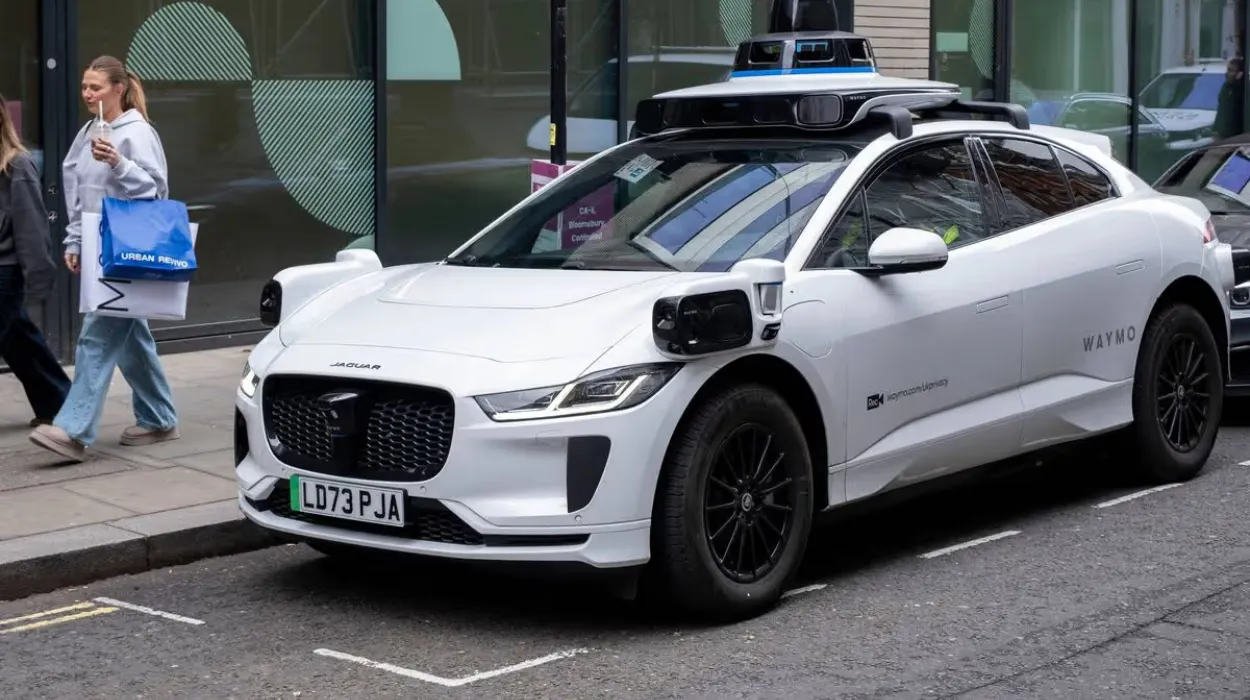
The companies have indicated that they hope to introduce fully driverless services in London in 2027, subject to regulatory approval. US-based Waymo, owned by Alphabet, is also preparing to expand its autonomous vehicle operations in the UK. Its arrival adds another major competitor to an increasingly crowded market. The developments underline London’s growing importance as a potential European hub for autonomous transport.
Why is the Mayor concerned?
Khan’s concerns extend beyond whether a driverless car can navigate London’s busy streets. The Mayor has questioned how a large fleet of autonomous taxis might affect traffic levels, pollution and the city’s wider transport objectives. He has also highlighted the potential impact on people who depend on driving for their income.
London has a population of almost 10 million and a transport network that includes narrow roads, busy junctions and densely populated neighbourhoods. Khan argues that the capital cannot simply adopt the same approach as cities with different road layouts and transport demands.
He is also seeking greater powers for Transport for London (TfL), arguing that the city should have more control over the number of autonomous vehicles operating within its boundaries. Under the current regulatory arrangements, TfL has a role in providing local consent but does not have the same licensing and fleet-management powers over autonomous passenger services that it exercises in other parts of London’s taxi and private-hire industry.
What does the government say?
The UK government, however, sees autonomous vehicles as an opportunity to transform transport and support economic growth. On 22 May 2026, the Department for Transport opened applications for operators to participate in its self-driving passenger vehicle pilot scheme.
Roads and Buses Minister Simon Lightwood said: “Self-driving vehicles represent a transformative opportunity for Britain, opening up independent travel for disabled people and older adults, while driving growth and creating high-skilled jobs across the UK.”
The government has also highlighted road safety as a key reason for developing the technology. Its May announcement cited figures indicating that human error contributes to 88% of collisions on UK roads.
However, the government has maintained that autonomous services will be subject to safety assessments and regulatory approval, with local transport authorities required to provide consent.
Can robotaxis replace London’s black-cab drivers?
For London’s traditional taxi industry, the expansion of autonomous vehicles presents an uncertain future.
Black-cab drivers and private-hire workers have raised concerns about job security as technology companies prepare to expand driverless services. Protests have also taken place outside the London offices of autonomous-driving companies.
Danny O’Gorman, UK and Ireland general manager at Freenow by Lyft, has argued that autonomous vehicles are not intended to replace London’s iconic black cabs. He has also suggested that some displaced drivers could find opportunities in remote vehicle operations, servicing and other supporting roles.
Nevertheless, questions remain over how quickly these new employment opportunities could emerge and whether they would provide comparable income and job security.
The road ahead
The London Assembly has already begun examining the implications of autonomous passenger vehicles, including their potential effects on employment, road safety, accessibility and the city’s transport strategy.
Its investigation, adopted on 22 May 2026, also considers whether autonomous taxis can support London’s ambition to reduce traffic and encourage more journeys by public transport, walking and cycling.
For now, the central challenge is finding a balance between technological progress and public interest.
Robotaxis promise greater convenience, new mobility options and potentially safer roads. But without effective oversight, they could also create new problems for a city already struggling with congestion and pressure on its transport infrastructure.
As companies compete to bring driverless services to London, one question remains: should the future of the capital’s transport system be determined by technology companies, or by the city and the people who depend on its roads every day?