Key Points:
- Sudden Closure: The newly reopened pie and mash venue, trading under the name 74 Chapel Market, has permanently shuttered after just one month in operation.
- Historic Rebirth: The venture had revived the Grade II-listed former site of the legendary M. Manze, which served traditional cockney food for over a century before closing in 2019.
- Unclear Reasons: Co-owners Martin Savage and John Gordon cited “issues out of our control” in an abrupt social media announcement before deleting their Instagram account.
- Local Disappointment: Islington residents are left deeply divided and confused, with some lamenting the loss of another community asset and others criticising the deviations from traditional, low-cost recipes.
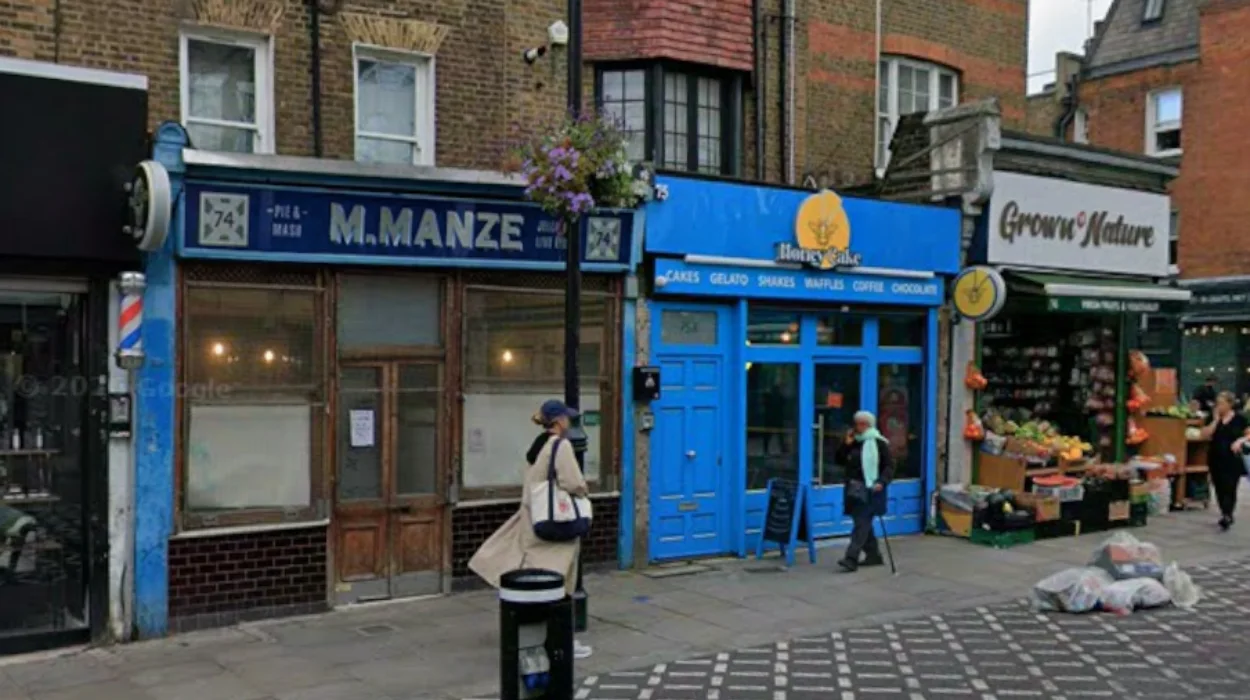
Islington (Extra London News) July 15, 2026 – A brief, highly anticipated revival of North London’s culinary heritage has come to an abrupt end after the “reimagined” pie and mash shop at 74 Chapel Market closed its doors permanently, merely four weeks after its grand opening. The business partners behind the short-lived venture, Martin Savage and John Gordon, announced the sudden closure via social media, citing unspecified external complications that made continued trading impossible.
The closure has sent shockwaves through the local community, leaving residents and market traders deeply confused. The building itself—a celebrated, Grade II-listed property that housed the legendary M. Manze pie, mash, and eel shop for over 100 years—had been vacant since 2023 following the brief, unsuccessful tenure of a steak restaurant called Beefsteaks. This sudden exit represents another significant blow to the capital’s historic and working-class culinary landmarks.
Why Did 74 Chapel Market Close So Quickly?
The business, which sought to blend century-old cockney culinary traditions with modern Irish elements, announced its immediate departure in a sudden statement published online. As reported by the editorial staff of MyLondon, the owners of 74 Chapel Market shared a brief message on social media stating: “Unfortunately, due to some issues out of our control, we are no longer able to keep on trading. Thank you so much to everyone who came through and big thank you to our staff. Without them we couldn’t have done it at all.”
Almost immediately following the publication of this statement, the establishment’s official Instagram page was entirely deleted. This move effectively cut off any direct line of communication with customers, leaving the precise nature of the “issues” entirely unexplained. Locals and market observers have spent the last 24 hours speculating on whether the closure was driven by skyrocketing operational costs, sudden licensing complications, or a lack of sustainable footfall.
The economic climate for London’s hospitality sector remains notoriously volatile, with independent businesses constantly battling soaring commercial rents, high business rates, and the ongoing impact of the cost-of-living crisis. These same factors originally forced the historic M. Manze branch to close its doors in 2019, and they continue to pose an existential threat to businesses across the capital.
What Was the History of M. Manze’s Pie and Mash Shop?
To understand the profound community disappointment surrounding the sudden closure, one must look at the deep historical roots of 74 Chapel Market. As detailed by features editor Bridget Galton of the Islington Gazette, the building at 74 Chapel Market dates back to roughly 1795, when it was initially built as a residential home. The ground floor of the property was subsequently converted into a fried fish shop in 1854, before being transformed into an eel-and-pie house in 1898 by a man named John Antink.
The shop entered its most legendary era in 1912 when it was taken over by Luigi Manze, a relative of the renowned Italian-immigrant entrepreneur Michele Manze, who had established a prominent chain of pie and mash shops across London. As documented by Bridget Galton of the Islington Gazette, at the height of the family’s success, there were 13 distinct Manze shops scattered across the capital, serving as the social and culinary hubs of working-class London neighbourhoods.
For over a century, the Chapel Market branch was an iconic landmark of North London life. It became a Grade II-listed building in 1994, recognised by Historic England for preserving its beautiful Edwardian interior, which features high-backed wooden benches, marble tables, a terrazzo floor, and walls adorned with mirrors and tiles.
The Manze family personally operated the business until 1985 before leasing it to a franchisee. However, the business ultimately shut its doors in 2019 after struggling under the weight of rising business rates and rents, drawing a large crowd of emotional locals who came to bid a final farewell.
How Did Islington Locals React to the Sudden Closure?
The news of the rapid shutdown has sparked intense debate among Islington residents, with reactions ranging from deep sympathy to frustration over the “reimagined” culinary concept. On local social media groups, some residents voiced their sadness at seeing a passionate independent venture collapse so quickly. Others, however, pointed out that the shop’s modern menu might have alienated the very traditionalists who were eager for a classic pie and mash experience.
As reported by the reporting team at MyLondon, one resident commented on Facebook, noting: “Well that didn’t last long… Shame the business has closed as they seemed lovely people, but hope and pray a real pie n mash shop opens up there soon.”
Another local pointed out the potential disconnect between the menu’s pricing and the traditional expectations of market shoppers, stating: “I heard people were moaning about the price! I don’t know, I didn’t go in, but it was nice to see it open again and still the same inside.”
Many felt that the “modernisation” of the traditional Cockney dish was the ultimate cause of its commercial struggles. Traditional pie and mash has historically been a low-cost, filling meal designed for the working class, consisting of simple minced beef pies, mashed potatoes, and parsley-based liquor. When pricing or recipes stray too far from these origins, businesses can find it difficult to retain a loyal, local customer base.
Explore more Islington News:
Islington Council Invests £390m Following RSH Judgement, Islington 2026
Islington Assault: Man Fighting For Life After North London Attack, 2026
What Was the ‘Reimagined’ Menu at 74 Chapel Market?
When Martin Savage and John Gordon took over the lease of the empty site, they did so with the explicit intention of respecting the history of the building while introducing a modern twist. They preserved the stunning, historic interior and retained the classic “M. Manze” signage out of respect for the building’s heritage.
As reported by journalist Finn Logue of the Islington Tribune, Martin Savage explained prior to the launch: “We want to respond to people’s desire to have something simple and classic, which is the pie and mash offer. But we also understand that this has to adapt. Manze’s offer belongs to the family themselves, and so we’re doing something a little different, but still with reference to the old classic.”
The menu, which was designed by Martin Savage’s son, was intended to reflect the family’s dual Irish and English roots, connecting the working-class histories of both communities. As reported by Finn Logue of the Islington Tribune, Martin Savage described this creative direction prior to opening:
“The menu reflects the connection between Ireland and England and the working-class people who move between different communities. We’ll put some different flavours in, and we’ll have a few different flavours of mash. It’s all about being creative and interesting with it – maintain the classic menu but with an Irish twist, which complements the local offer.”
This modern approach included serving pies with rich gravy alongside the traditional parsley liquor, as well as offering various experimental mash flavours. While this culinary fusion was welcomed by food enthusiasts looking for a contemporary twist, it appears to have divided the traditionalists who wanted a strict replication of the original, simple M. Manze recipes.
What Lies Ahead for the Historic Listed Site?
The rapid closure of 74 Chapel Market raises urgent questions about the long-term future of this precious Grade II-listed building. Because of its protected statutory status, the building’s Edwardian interior—including the original wood cornices, high-back wooden benches, marble tables, and tiled walls—cannot be easily altered or removed by future tenants. While these protections preserve London’s architectural history, they also limit the types of businesses that can realistically occupy the space.
Before 74 Chapel Market opened, local market traders had expressed high hopes that the reopening of the site would bring footfall back to the street. As reported by Finn Logue of the Islington Tribune, Feyza Kose, a fruit and vegetable trader who has run a stall in Chapel Market for seven years, was among the very first customers to support the new shop when it launched. The immediate loss of the business is a disappointing setback for the active market community, which relies on anchor businesses to draw shoppers away from major supermarkets and into the historic street market.
The broader UK pie and mash scene is also facing widespread consolidation and closures. As highlighted by the reporting team at MyLondon, the closure of 74 Chapel Market came as a double blow to London’s traditional food map, coinciding with the announced closure of another of West London’s few remaining pie and mash shops.
As the site at 74 Chapel Market sits empty once again, local preservationists, historians, and residents are left hoping that any future occupant will be able to successfully balance the financial realities of modern London hospitality with the deep-seated cultural expectations of this historic working-class community.