Key Points
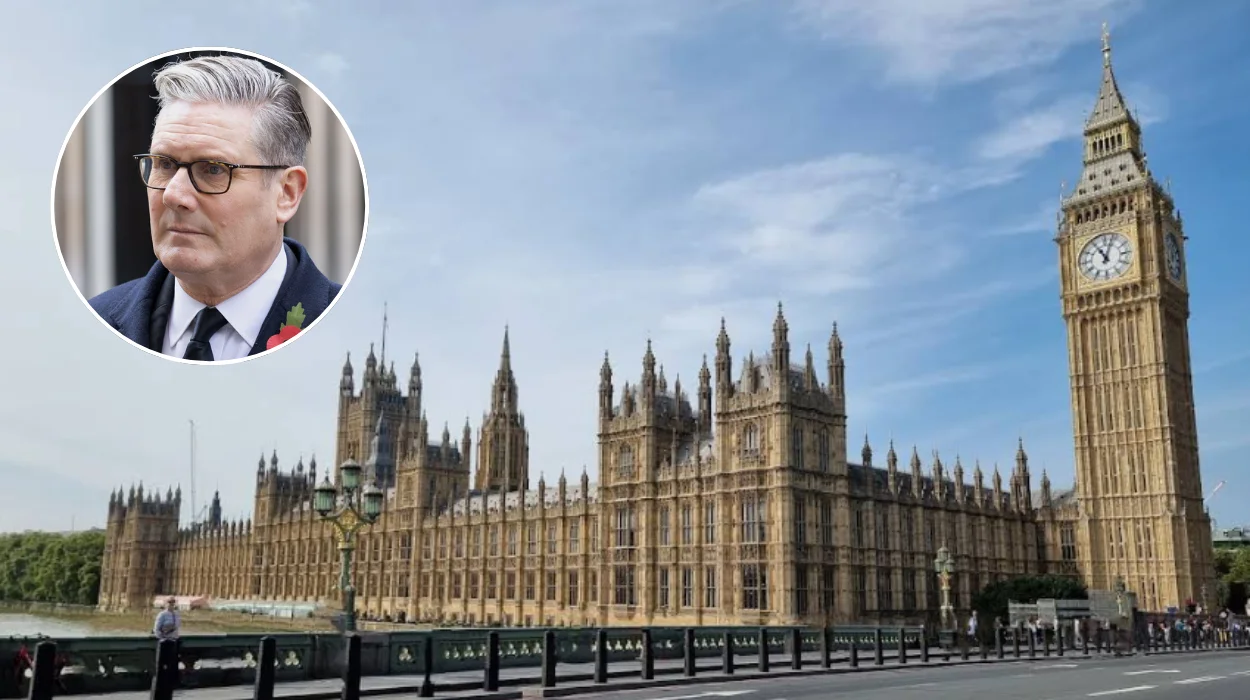
- British Prime Minister Sir Keir Starmer departed 10 Downing Street on Wednesday to attend what is expected to be one of his final Prime Minister’s Questions (PMQs) sessions in the House of Commons.
- The outgoing Prime Minister faced intense scrutiny and a fierce political onslaught from Conservative Leader Kemi Badenoch regarding a reported £5 billion funding shortfall in the government’s newly unveiled £298 billion Defence Investment Plan (DIP).
- Starmer defended the plan, asserting that a £22 billion fiscal headroom established during the last budget would be utilized to cover the funding gap, while accusing the opposition of historical defence cuts and exploding welfare costs.
- Downing Street confirmed that Starmer will remain the Member of Parliament (MP) for Holborn and St Pancras following his formal departure from office but is highly unlikely to accept a cabinet role under his anticipated successor, Andy Burnham.
- Greater Manchester Mayor and Makerfield MP Andy Burnham is expected to enter Downing Street as the next Prime Minister on July 17, 2026, amid reports of “frosty” transitional talks and significant cabinet friction over regional infrastructure funding diversions.
London (Extra London News) July 01, 2026 – Outgoing British Prime Minister Sir Keir Starmer departed 10 Downing Street this afternoon to face a highly charged and combative House of Commons for Prime Minister’s Questions, where he fiercely defended his administration’s final legacy policies amid intense pressure from both the Conservative opposition and internal party factions. In what marks his penultimate appearance at the dispatch box before handing over the reins of government later this month, Starmer found himself at the centre of an explosive parliamentary battle regarding the structural integrity of his newly announced £298 billion Defence Investment Plan. The session underscored the mounting political and economic challenges gripping Westminster as the nation prepares for an unprecedented mid-term leadership transition, with Greater Manchester Mayor and Makerfield MP Andy Burnham poised to succeed him as Prime Minister on July 17, 2026.
Why Did Kemi Badenoch Attack Keir Starmer’s Defence Plan at PMQs?
The primary flashpoint of Wednesday’s parliamentary session revolved around the newly unveiled £298 billion Defence Investment Plan (DIP), which opposition leaders claim is structurally flawed. As reported by Nicholas Cecil and Madelaine Dowds of Yahoo News, Conservative Leader Kemi Badenoch launched a blistering assault on Starmer’s military strategy, accusing the government of leaving a massive financial liability for the incoming administration.
Badenoch targeted what analysts have described as a multi-billion-pound deficit in the core funding mechanism of the programme. As reported by Nicholas Cecil and Madelaine Dowds of Yahoo News, Kemi Badenoch stated in the Commons chamber that “Generals can count, the Kremlin can count, his defence plan doesn’t add up.” The Conservative leader claimed that the administration had fundamentally failed to secure the necessary long-term capital to sustain the ambitious military expansion, creating an immediate crisis of credibility for British security interests abroad.
Furthermore, the opposition argued that the structural shortfall directly undermines the welfare of active-duty personnel. As reported by Andrew Sparrow in The Guardian’s live political coverage, Kemi Badenoch stated that “It is not right, and it is not fair, certainly not to our troops who put their lives on the line for all of us every single day.” She asserted that the Prime Minister’s final major policy initiative had completely unravelled within forty-eight hours of its announcement due to a lack of concrete treasury backing, declaring that “Even the limited plan that he has announced has completely unravelled because he hasn’t found the money to pay for it. It is £5bn short. We all know that he is leaving this mess to his successor.”
What are the specific financial details of the £5 billion defence black hole?
The underlying economic debate centers on how the United Kingdom intends to meet its international security obligations without triggering fiscal instability. As reported by Andrew Sparrow of The Guardian, the £298 billion Defence Investment Plan is structured to elevate British military spending from 2.6 per cent of Gross Domestic Product (GDP) in 2027 to 2.7 per cent—equivalent to nearly £80 billion annually—by the year 2030.
However, independent economic oversight bodies have expressed severe reservations regarding these projections. As reported by Andrew Sparrow of The Guardian, a comprehensive analytical report released by the Institute for Fiscal Studies (IFS) confirmed that the current Dip framework lacks a clear, itemised trajectory to achieve the broader Nato target of 3.5 per cent of GDP by 2035, a commitment that Starmer and other international leaders had collectively agreed to under intense diplomatic pressure from the United States administration last year.
How Did the Prime Minister Respond to Allegations of a Funding Shortfall?
Standing at the parliamentary dispatch box, Sir Keir Starmer delivered a robust counter-offensive, deflecting blame back onto the opposition’s historical governance records. As reported by Andrew Sparrow of The Guardian, Sir Keir Starmer stated that the Conservative Party was exhibiting “faux outrage” over the defence budget, countering that the previous Tory administrations had spent fourteen years systematically weakening the nation’s frontline capabilities.
Starmer provided detailed figures to support his administration’s economic stewardship, claiming that his cabinet had successfully identified supplementary capital outside of standard budgetary constraints. As reported by Andrew Sparrow of The Guardian, Sir Keir Starmer stated that
“They cut defence by 2.5% down to 2.3% in their 14 long years. And what [did they] do on welfare? They put the bill up by £88bn. So no lectures from them.”
How will the government plug the multi-billion-pound funding gap?
To address the immediate anxieties regarding the multi-billion-pound deficit, the Prime Minister pointed to unspent reserves earmarked during previous financial statements. As reported by Andrew Sparrow of The Guardian, Sir Keir Starmer stated that “Because of the decisions at the last budget, we’ve got headroom of £22bn. That is precisely so we can take decisions like this.” Starmer argued that the estimated £1 billion annual requirement over the next four consecutive fiscal years would be safely absorbed by this existing budgetary headroom, thereby negating the need for emergency tax hikes or immediate borrowing.
When pressed explicitly on whether his incoming successor had been fully appraised of these internal liabilities prior to the public announcement, the Prime Minister chose to frame the issue as a collective party triumph. As reported by Andrew Sparrow of The Guardian, Sir Keir Starmer stated that
“We’ve made record investment in defence and security. I’m proud of this Labour government and any Labour prime minister would stand behind this plan.”
Explore more Politics News:
Andy Burnham Outlines National ‘Manchesterism’ Blueprint: Manchester 2026
Andy Burnham Outlines National ‘Manchesterism’ Blueprint: Manchester 2026
What Role Will Keir Starmer Take After Leaving Office?
As the reality of the impending leadership transition sets in, speculation has mounted regarding Starmer’s long-term political future within the legislative branch. As reported by The Guardian’s political desk, an official Downing Street spokesperson confirmed that Sir Keir Starmer will remain the Member of Parliament for the central London constituency of Holborn and St Pancras after formally stepping down from the premiership, maintaining his 11,000-vote majority seat in the House of Commons.
However, the outgoing leader has explicitly ruled out an ongoing role within the executive branch under the new administration. As reported by The Guardian, a Downing Street spokesperson stated that Starmer is not expecting to assume a position within Andy Burnham’s incoming cabinet, despite widespread backbench rumors suggesting he might be offered the role of Foreign Secretary to maintain diplomatic continuity ahead of the upcoming Nato summit in Ankara.
Reflecting on his tenure during a poignant moment in Wednesday’s session, the Prime Minister expressed deep pride in his parliamentary party’s historical performance. As reported by The Guardian, Sir Keir Starmer stated that
“I’m very proud of every one of our MPs who’ve had a landslide Labour victory, coming from all different backgrounds, from all different places across the country. We inflicted the biggest loss on the Tory party opposite in the history of their party. We picked up our party, we turned it around.”
The spokesperson further indicated that Starmer had delivered a definitive farewell message to his frontbench colleagues, stating,
“This is the end of my journey, but this is not the end of yours.”
Why is There Tension Between Keir Starmer and Successor Andy Burnham?
The transition of power has been complicated by deep-seated policy disagreements and administrative friction between the outgoing No 10 staff and the team surrounding the incoming Prime Minister. As reported by The Guardian, a prominent political ally of Andy Burnham described the unbacked elements of the Defence Investment Plan as an “unexploded bomb” left on the doorstep of the next administration, claiming that the Makerfield MP had been kept entirely in the dark regarding the £5 billion funding deficit during his initial policy briefings.
This internal rift was further exacerbated by emergency fiscal reallocations that directly impacted regional development. As reported by Andrew Sparrow of The Guardian, senior government ministers and regional MPs have expressed fury over quiet cuts to critical transport infrastructure and road projects, which were engineered behind closed doors to divert liquid capital into the defence fund.
What occurred during the private meetings between Starmer and Burnham?
The growing animosity culminated in a highly unusual, off-site confrontational meeting between the two political heavyweights earlier this week. As reported by The Guardian, Sir Keir Starmer met with Andy Burnham on Tuesday afternoon in a neutral location away from Downing Street for a private summit that senior political aides later characterised as deeply “frosty” and strained.
Despite the evident personal and professional distance between the two leaders, procedural arrangements for the transfer of authority are moving forward under strict constitutional guidelines. As reported by The Guardian, an internal source stated that “Keir has shown time and again that he will put the interests of the country first but it is fair to say the meeting wasn’t the warmest.” To ensure administrative stability, Starmer has officially sanctioned access talks between Burnham’s transition team and the civil service, led by Cabinet Secretary Antonia Romeo. A Downing Street spokesperson confirmed that Starmer has committed to a strict policy of implementing “no new major policy or spending commitments” prior to July 17 that could legally or financially tie his successor’s hands, though the controversial defence plan remains classified as entirely settled.
Global Media Perspective
| Media Publication | Reporting Journalist | Editorial Stance / Focus |
| The Guardian | Andrew Sparrow | Focused heavily on the internal Labour party split, transport funding cuts, and the IFS analysis of the Nato spending targets. |
| Yahoo News / Standard | Nicholas Cecil & Madelaine Dowds | Emphasised the parliamentary theater of PMQs, depicting Starmer as politically isolated against a sharp Conservative attack. |
| NurPhoto / Reuters | Wiktor Szymanowicz | Captured the visual departure of the Prime Minister from Downing Street, documenting the somber mood of the transition. |