Key Points
- New Penalty System: Individuals engaging in alcohol-fuelled antisocial behaviour across the London Borough of Camden will face a immediate £100 fixed penalty notice.
- The Legislative Power: Measures are introduced via a Public Spaces Protection Order under the strict provisions of the Anti-Social Behaviour, Crime and Policing Act 2014.
- Enforcement Discretion: Police officers and council enforcement staff are empowered to demand individuals cease drinking and surrender any alcohol containers.
- No Blanket Prohibition: The regulation is not a complete or absolute ban on public alcohol consumption; responsible socialising in public parks and open spaces remains lawful.
- Geographical Exclusions: The restrictions apply across all public areas within Camden, explicitly excluding Hampstead Heath, which rests under alternative jurisdiction.
- Implementation Date: The approved enforcement framework is officially scheduled to commence operation in July 2026 for a fixed operational timeline of three years.
- Support Frameworks: Parallel intervention schemes will connect vulnerable or displaced street drinkers to local safeguarding, substance misuse, and housing support groups.
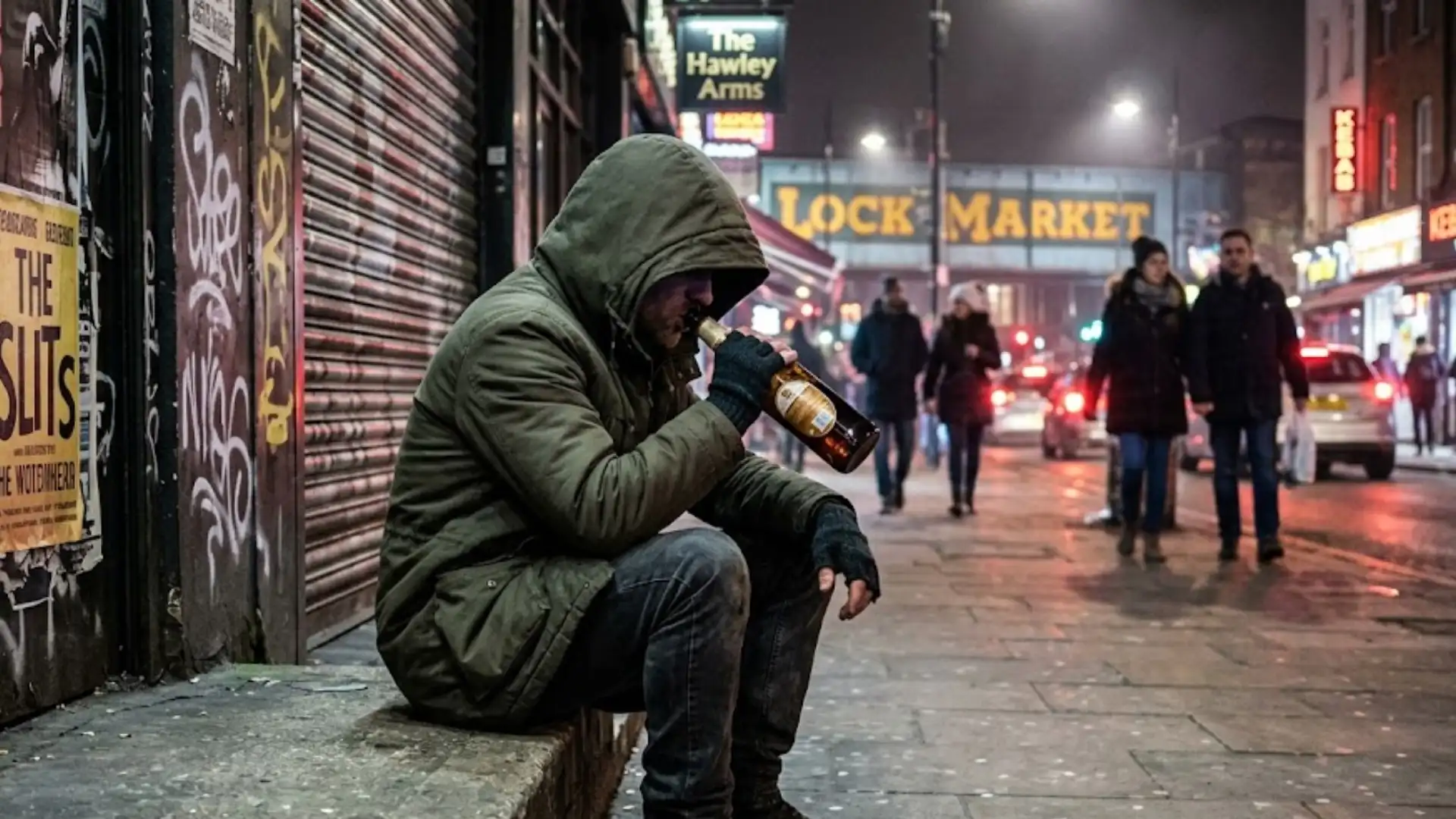
Camden (Extra London News) June 13, 2026 – Disruptive street drinkers and rowdy outdoor crowds face targeted financial penalties across Camden after local authorities formally ratified a sweeping public safety framework to combat alcohol-fuelled antisocial behaviour. The north London local authority approved the implementation of a comprehensive Public Spaces Protection Order, authorising law enforcement personnel and designated municipal officers to confiscate alcohol or levy immediate £100 fines on uncooperative individuals. The contentious legislation, slated to take physical effect from July 2026, aims to pacify commercial thoroughlyfares and residential zones that have experienced a resurgence of rowdy behavior following the expiration of prior municipal bylaws.
- Key Points
- What Exactly Triggered the New Restrictions?
- Which Areas Are Identified as Hotspots?
- How Will the Fines and Confiscations Work?
- What Do the Council Leaders Say?
- How Does the Law Protect Vulnerable Populations?
- Why Is the Concept of “Responsible Drinking” Disputed?
- What Is the Broader Context of This Law?
What Exactly Triggered the New Restrictions?
The administrative move stems from escalating community anxieties over the visible deterioration of public order in several high-profile districts. According to reporting compiled by journalist Josef Steen of The Standard, Camden currently ranks eighth out of all 32 London boroughs regarding recorded antisocial behaviour incidents, with Metropolitan Police data documenting 9,117 distinct incidents between May 2025 and April 2026. This data underscores an ongoing civic battle against street disorder, prompting the local administration to reintroduce stringent regulatory parameters that lapsed six years prior.
As detailed by Steen in The Standard, Camden Council had previously initiated a comparable suite of public drinking controls in 2015, yet those particular municipal powers quietly expired in 2020. In the intervening years, local authorities faced a steady volume of community standard complaints, with a report submitted to senior cabinet councillors officially noting that
“antisocial behaviour and crime relating to the irresponsible use of alcohol in public places continues to be a regular source of concern amongst residents, particularly within the night-time economy.”
Public feedback heavily weighted the council’s decision-making process. The local authority executed an extensive public consultation initiative during the opening months of 2026, drawing nearly 200 formal submissions from local business owners, permanent residents, and regional visitors. The analytical breakdown published by The Standard indicated that an overwhelming 78 per cent of surveyed respondents explicitly backed the reintroduction of localized enforcement powers. Witnesses routinely described scenarios involving hostile groups behaving aggressively, with multiple entries citing specific instances of intoxicated men shouting verbal abuse and harassing women and girls in public squares.
Which Areas Are Identified as Hotspots?
The institutional reports indicate that alcohol-fuelled disturbances are not uniformly distributed across the borough, but rather cluster tightly around prominent transport hubs and nightlife destinations. As published by journalist Josef Steen of The Standard, the public consultation feedback frequently identified Camden Town centre, Tottenham Court Road, and the historic streets of Fitzrovia as the primary regional hotspots for alcohol-fuelled antisocial behaviour.
The operational boundaries of the approved Public Spaces Protection Order will encompass all public streets, pathways, and open municipal parks within the borders of the borough. However, the order features a notable administrative omission driven by historical land-management structures. The local authority’s official press statements clarify that the incoming restrictions will cover all public spaces except for Hampstead Heath, an expansive green space that escapes the council’s penal mechanism because it falls under the direct operational management and ownership of the City of London Corporation.
Explore More Camden News
Camden Council Unveils Future-Built Talacre Sports Centre: Kentish Town 2026
Legendary Grassroots Venue Barfly Returns to Camden: London 2026
How Will the Fines and Confiscations Work?
The mechanics of the Public Spaces Protection Order do not criminalise the mere possession of a container of alcohol, nor do they penalise traditional recreational activities like picnics. Instead, the enforcement trigger relies entirely on the manifested behavior of the consumer. As reported via the Local Democracy Reporting Service, the legal measures explicitly empower Metropolitan Police officers and authorized council enforcement wardens to approach individuals who are actively engaging in antisocial behavior while drinking.
The responding officers possess the legal authority to command an individual to immediately cease drinking alcohol or to surrender their beverage containers. This includes any liquid substance that an attending officer reasonably believes to be alcohol, irrespective of whether the container is unsealed or fully manufactured and sealed.
If an individual complies with the instruction to hand over the container or cease consumption, no further penal action is pursued. However, if an individual defiantly breaches the conditions by refusing the officer’s lawful request, they commit a summary offense. As reported by the Local Democracy Reporting Service, non-compliant individuals will be issued a Fixed Penalty Notice of £100. According to official guidelines published by Camden Council’s press office, the recipient is granted a strict window of 28 days to clear the financial penalty, after which the local authority is legally authorized to initiate formal prosecution through the judicial system, where a court conviction can elevate the maximum financial penalty up to £500.
What Do the Council Leaders Say?
The political leadership of Camden Council has sought to strike an exact balance between robust municipal enforcement and reassurance for standard weekend socializers. The policy was pushed forward during the initial cabinet session overseen by Camden’s newly appointed leader, Councillor Sagal Abdi-Wali.
As reported by Josef Steen of The Standard, Cabinet Member for Safer Communities and Deputy Leader, Councillor Adam Harrison, emphasized that the measures are targeted solely at hostile and disruptive behavior rather than everyday park-goers. In an official public statement released on Wednesday, Harrison stated:
“This isn’t about a casual drink in the park with friends, this is about clamping down on anti-social and irresponsible drinking that we know negatively impacts residents, businesses, and visitors in Camden.”
Harrison further detailed the operational presence backing the policy, adding:
“Our enforcement officers patrol the borough seven days a week, deterring criminals and looking out for your safety. If you have concerns about anti-social behaviour in your area, we’re here for you and urge you to report it. Every report matters and will be taken seriously.”
This position was supported by the broader cabinet. In an early administrative overview documented by The Fitzrovia News, the long-serving Deputy Leader, Councillor Patricia Callaghan, clarified the council’s institutional stance toward the borough’s lucrative nighttime economy, asserting:
“While many people drink alcohol responsibly in Camden, these new powers would allow us to take further action against people acting irresponsibly on our streets and causing intimidating or unsafe behaviour towards others.”
According to additional reporting from The Standard, Callaghan expanded on this sentiment during the cabinet assembly, noting:
“We know that the majority of alcohol consumption in Camden is carried out in a responsible way. We want people to enjoy themselves, and it doesn’t have a negative impact on our community. Where there are community concerns around anti-social behaviour associated with some alcohol consumption, we hope that this PSPO will help to alleviate these issues.”
How Does the Law Protect Vulnerable Populations?
A central point of debate surrounding the implementation of Public Spaces Protection Orders across metropolitan London is their socioeconomic impact on vulnerable communities, particularly unhoused rough sleepers and chronic alcoholics who live primarily in public spaces. Critics frequently argue that such orders can function as a tool to criminalise poverty and displacement.
To counter these structural criticisms, Camden Council has stated that its enforcement protocols will operate alongside social safety nets. As detailed in the independent local publication Ham & High, the municipal enforcement strategy mandates that officers do not simply hand out fines, but must actively coordinate with partner organisations to assist vulnerable street populations.
According to the operational plan reviewed by Ham & High, enforcement wardens are instructed to provide formal direct referrals to specialized alcohol and substance misuse treatment teams, dedicated local rough sleeping outreach services, and regional safeguarding units. This multi-agency framework is designed to ensure that chronic street drinkers facing complex addictions are routed into therapeutic pathways rather than being funneled into the criminal justice system through unpaid fines.
Why Is the Concept of “Responsible Drinking” Disputed?
While the local government frames the incoming Public Spaces Protection Order as a vital step toward establishing what they term a “responsible drinking borough,” the language used in the policy has faced scrutiny from public health institutions. The phrase has opened up a ideological divide between local municipal governance and public health advocates.
As documented by the editorial team at The Fitzrovia News, the foundational premise of “responsible drinking” has drawn criticism from the Institute of Alcohol Studies (IAS). The independent organization argues that the terminology is essentially a corporate public relations mantra originally devised by the United Kingdom’s commercial alcohol sector to deliberately obscure macro-level data surrounding alcohol-related physical harms and societal damage.
Furthermore, The Fitzrovia News highlighted that the World Health Organisation (WHO) maintains an absolute epidemiological stance on the issue, stating directly that “no level of alcohol consumption is safe for our health.” The global health body emphasizes that any marginal cardiovascular benefits traditionally associated with light drinking are completely negated by the elevated risks of oncological diseases, even when consumption remains strictly within “light” or “moderate” structural limits.
What Is the Broader Context of This Law?
The legislative tool deployed by Camden is part of a wider national framework created over a decade ago. As noted by the Local Democracy Reporting Service, Public Spaces Protection Orders were originally introduced across England and Wales under the comprehensive provisions of the Anti-Social Behaviour, Crime and Policing Act 2014. These specific legal mechanisms intentionally granted local councils powers to draft tailored restrictions designed to address specific, persistent nuisances within their respective geographic boundaries.
Camden’s regulatory approach aligns closely with standard local government practices across the capital. Investigative data published by The Standard confirms that the vast majority of London boroughs have long maintained identical or highly similar localized restrictions on street drinking. Camden’s immediate geographic neighbors—including the boroughs of Haringey, Islington, and the City of Westminster—all currently operate active Public Spaces Protection Orders targeting public alcohol disruption.
The incoming order is bound by statutory sunset clauses designed to prevent permanent regulatory overreach. The council’s legal press releases note that the orders will remain in active effect for an initial duration of exactly three years starting July 2026. Prior to its expiration in 2029, Camden Council will be legally required to execute a comprehensive data review and host a follow-up public consultation before any further extension can be officially granted.