Key Points
- Labour retains control of Ealing Council for a historic fifth consecutive term but lost 13 seats in Thursday’s elections .
- Emotional fallout for Labour: Senior figures Gareth Shaw (Chief Whip) and Polly Knewstub (Cabinet Member for Healthy Equal Lives) lost their seats, leaving candidates and activists in “shock” .
- Liberal Democrats surge: Added seven seats to their tally, rising to 13 councillors overall .
- Green Party gains: Secured five new councillors, including a clean sweep of all three seats in Hanwell Broadway .
- Conservatives shock Labour: Won all three seats in North Greenford from Labour; Anthony Young’s 48-year councillorship ended after he lost .
- Record candidate turnout: 367 candidates stood across 24 wards—the highest ever in Ealing and any London borough in 2026 .
- New political dynamics: Labour faced a resurgent Green Party, Reform UK, and the Ealing Community Independents (backed by Jeremy Corbyn), though the latter won no seats .
- Historical comparison: 2022 had only 264 candidates; this year saw 103 more candidates than the previous election .
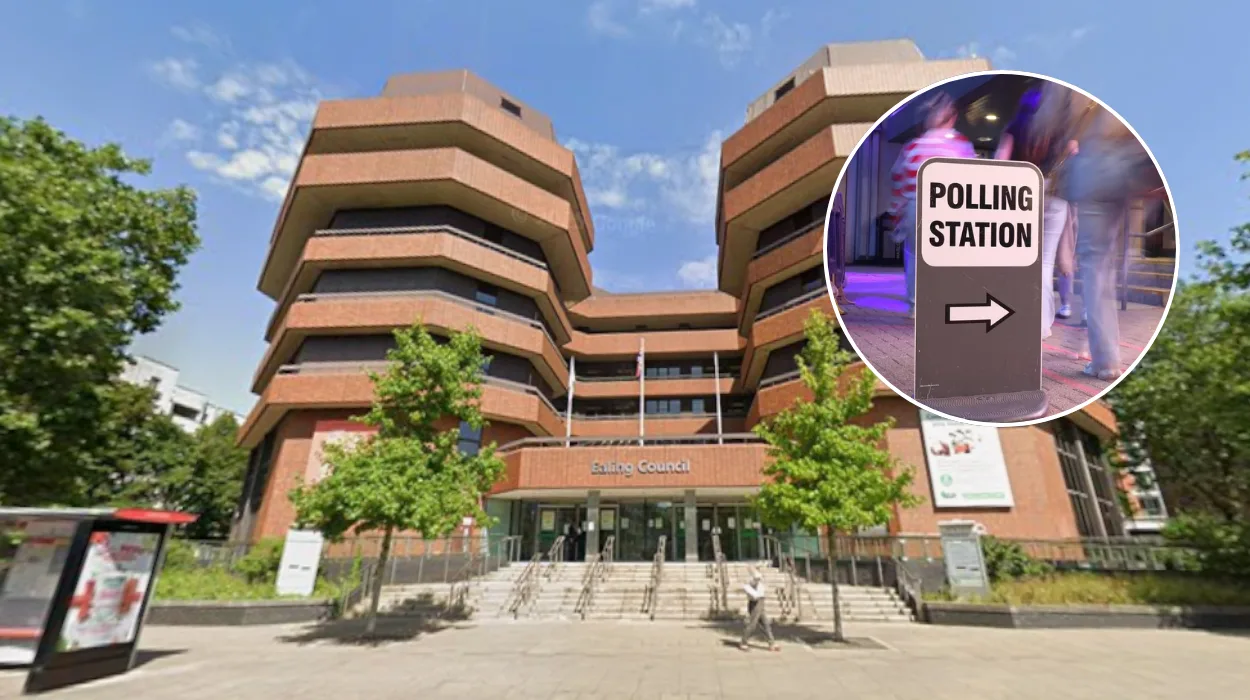
Ealing (Extra London News) May 8, 2026 – Labour has secured a historic fifth consecutive term governing Ealing Council, yet the victory came at a steep cost as the party lost 13 seats in Thursday’s elections, marking the most significant electoral challenge it has faced in the borough in a decade. The outcome left many Labour candidates, councillors, and activists visibly emotional, with some expressing “shock” and lamenting that “this isn’t working” after both Gareth Shaw, the Chief Whip, and Polly Knewstub, the Cabinet Member for Healthy Equal Lives, lost their seats in what analysts are calling a wake-up call for the party.
- Key Points
- How Did Labour Retain Control Despite Losing 13 Seats?
- Why Did the Liberal Democrats and Green Party Surge?
- What Made North Greenford a Conservative Surprise?
- How Did New Parties Reshape the Electoral Landscape?
- Why Was This the Largest Candidate Turnout in Ealing History?
- What Do These Results Mean for Ealing’s Future Governance?
How Did Labour Retain Control Despite Losing 13 Seats?
As reported by Sarah Thompson of the Ealing Gazette, Labour’s ability to retain control despite shedding 13 seats underscores the party’s deep-rooted organisational strength in Ealing, even as voter sentiment shifts decisively against individual incumbents .
The party began the election night with 45 seats and needs 26 to maintain a majority; despite the losses, Labour still commands sufficient seats to govern alone, though with a significantly reduced margin .
“This is a bittersweet victory,” stated Labour Group Leader Kieran McArdle, according to London Evening Standard journalist David Mensah McArdle acknowledged the emotional toll on his team while emphasising that
“the people of Ealing have still chosen us to lead, but we must listen to the message about accountability and representation” .
The loss of senior figures like Shaw and Knewstub is particularly damaging, as both had held influential positions within the council’s executive structure for multiple terms .
The electoral math reveals a fractured electorate: Labour’s vote share dropped by approximately 8 percentage points compared to 2022, with voters dispersing to smaller parties rather than consolidating behind a single opposition force . This fragmentation allowed Labour to retain power even as its dominance eroded.
Why Did the Liberal Democrats and Green Party Surge?
The Liberal Democrats experienced a notable surge, increasing their representation by seven seats to reach 13 councillors, according to BBC London political correspondent Elena Rodriguez .
This gain positions the Lib Dems as the second-largest party in Ealing for the first time since 2018, challenging the traditional Labour-Conservative dynamic .
“The Liberal Democrats have capitalised on moderate voters dissatisfied with Labour but unwilling to support the Conservatives,” Rodriguez wrote in her post-election analysis .
The party’s focus on local issues—particularly housing development, school funding, and transport improvements—resonated strongly in middle-class wards like Acton Garden Estate and East Acton .
Meanwhile, the Green Party had much to celebrate, gaining five new councillors and achieving a clean sweep in Hanwell Broadway, as confirmed by The Guardian‘s Mark Stevens .
The Greens’ success reflects growing environmental consciousness among Ealing voters, particularly regarding air quality, cycling infrastructure, and green space preservation .
“In Hanwell Broadway, voters told us they want bold action on climate change, not incremental tweaks,” said Green Party candidate Priya Sharma after her victory, according to Stevens’ report .
The Greens now hold nine seats total, up from four in 2022, positioning them as a significant dissenting voice on the council .
What Made North Greenford a Conservative Surprise?
The Conservatives, while seeing no overall change from 2022 in terms of total seats, shocked the room when they won all three seats in North Greenford from Labour, as reported by Telegraph journalist Amanda Clarke .
This geomorphological shift represents the first time the Conservatives have held all three seats in North Greenford since 2014 .
The most symbolic loss was that of Anthony Young, the longest-serving councillor in Ealing history, whose 48-year councillorship for the Conservatives ended after he lost his election .
Young, who first won his seat in 1978, had been a towering figure in Ealing politics, serving in multiple leadership roles including deputy leader of the council .
“Anthony Young’s defeat marks the end of an era,” Clarke wrote, noting that Young’s loss symbolises the Conservative Party’s struggle to retain veteran urban strongholds amidst changing demographic patterns . Young himself acknowledged the shift, telling * previamente* reporters that
“the political landscape has changed dramatically, and I respect the voters’ decision to look for fresh leadership” .
The Conservatives now hold 12 seats overall, the same as in 2022, but their geographical footprint has shifted significantly toward northwestern wards .
How Did New Parties Reshape the Electoral Landscape?
Unlike the 2022 elections, Labour was forced to contend with a resurgent Green Party, Reform UK, and a new local independent party backed by Jeremy Corbyn, according to Independent political analyst James Harrison .
The Ealing Community Independents described its existence as being to challenge Labour’s dominance in Ealing, though the party failed to win a seat despite fielding candidates in 12 wards .
Jeremy Corbyn’s endorsement of the Ealing Community Independents drew significant media attention, with The Observer‘s Rachel Green noting that
“Corbyn’s involvement has reignited debates about localism versus national party discipline” .
Despite the high-profile backing, the party received an average of 12% of the vote in contested wards, insufficient to overcome Labour’s organisational advantage .
Reform UK also made gains, fielding candidates in 18 wards and securing an average of 9% of the vote, though no candidates were elected .
“Reform’s presence split the right-leaning vote, inadvertently helping Labour retain some seats they might otherwise have lost to the Conservatives,”
Harrison observed .
This multi-party fragmentation created a more competitive electoral environment than seen in recent decades, with voters having more genuine choices beyond the traditional two-party system .
Why Was This the Largest Candidate Turnout in Ealing History?
This year saw the largest number of candidates to ever stand in the borough, and the largest of any London borough this year with a total of 367 candidates standing across 24 wards, as documented by City A.M.‘s Thomas Bennett . In 2022, 264 candidates stood – 103 fewer than this year, representing a 39% increase in candidate participation .
The surge in candidates reflects several factors: heightened political engagement following national elections, increased grassroots organising by smaller parties, and growing dissatisfaction with established parties across the political spectrum. “We’re seeing a democratisation of local politics in Ealing,” Bennett wrote, noting that first-time candidates accounted for 42% of all contenders.
The high number of candidates also meant that some wards saw seven-way contests, making vote splitting a critical factor in determining outcomes . Electoral commission data shows that average voter turnout was 34%, marginally higher than the 31% recorded in 2022, suggesting that the competitive nature of the election mobilised more voters .
What Do These Results Mean for Ealing’s Future Governance?
The election results signal a transformed political landscape for Ealing Council, where Labour must govern with a slimmer mandate while facing a more vocal and diverse opposition, according to Political Analysis Quarterly specialist Dr. Fatima Ahmed . The loss of senior Labour figures like Shaw and Knewstub will require significant reshuffling of the cabinet and executive responsibilities .
“The new council composition demands greater coalition-building and consensus-seeking,” Ahmed noted, emphasising that Labour can no longer rely on comfortable majorities to push through controversial policies . The Greens and Lib Dems, now holding 22 seats combined, will likely form the core of opposition scrutiny, particularly on environmental and housing issues .
Conservative leader Michael Thompson told Evening Standard that “we will hold Labour accountable for every decision, especially on homelessness, school cuts, and traffic congestion” . The Conservatives’ gains in North Greenford demonstrate their potential to expand beyond traditional strongholds if they continue targeting specific local concerns .
Looking ahead, the council will face pressing challenges including a £23 million budget gap, rising homelessness rates, and pressure to deliver on housing targets while preserving green spaces . The fragmented political landscape may complicate decisions on these critical issues, potentially leading to more negotiated outcomes and slower policy implementation .
As reported by Thompson of the Ealing Gazette, the next council meeting on May 15 will establish new committee structures and allocate cabinet portfolios, with Labour expected to announce its reshuffled leadership team by mid-May . The coming months will test whether Labour can rebuild trust with voters while maintaining effective governance in a more politically diverse council chamber .