Key Points
- A disqualified Mercedes driver, Tomololu Oyeniku, aged 42, was found asleep at the wheel due to extreme intoxication on the M25 slip road at Junction 30.
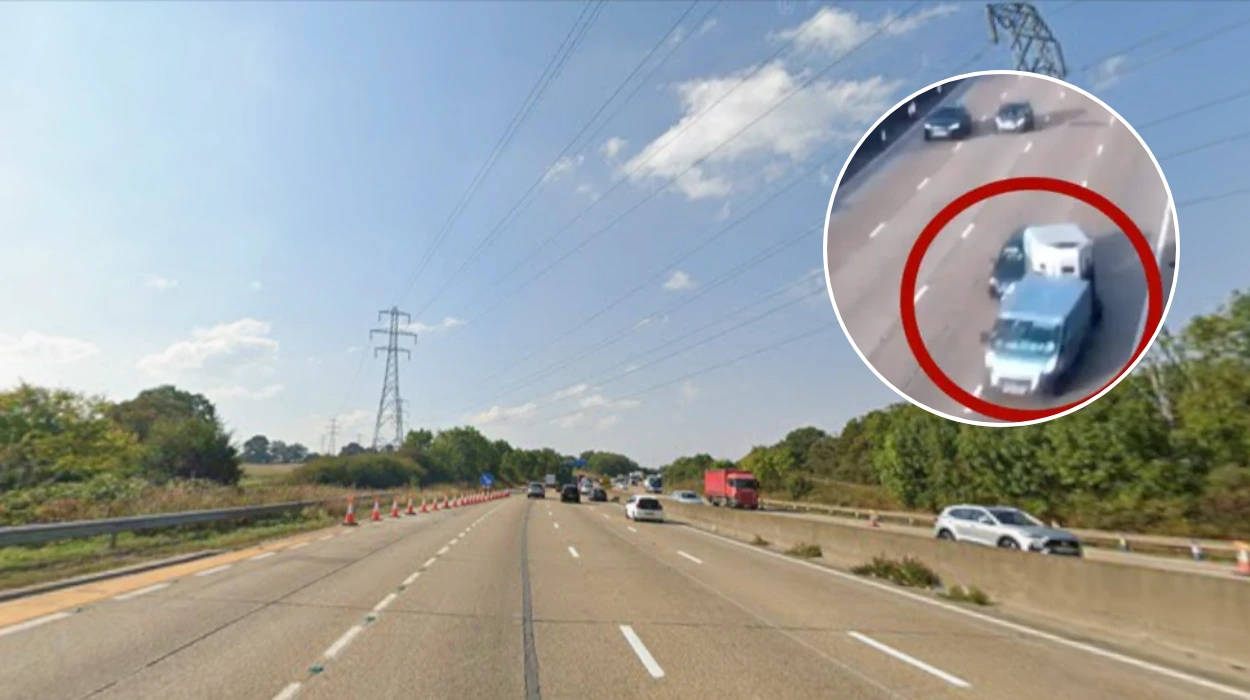
- The incident occurred when police left the M25 and entered the slip road, spotting a white Mercedes stationary in lane two of three.
- The vehicle’s engine was running, brake lights were on, despite green traffic lights, forcing other drivers to swerve to avoid collision.
- Officers observed Oyeniku slumped forward, hands on the steering wheel, head down; a strong smell of alcohol was evident upon opening the door.
- Oyeniku was disqualified from driving, highlighting prior motoring offences.
- No injuries were reported from the near-miss, but the incident underscores dangers of drink-driving on busy motorways.
Lakeside (Extra London News) April 25, 2026 – A disqualified driver was discovered asleep at the wheel of his Mercedes on a busy M25 slip road at Junction 30, so intoxicated that other motorists had to swerve around his stationary vehicle. Tomololu Oyeniku, 42, was found slumped forward with the engine running and brake lights illuminated despite green traffic lights. Police immediately detected a strong odour of alcohol upon approach, leading to his arrest on suspicion of drink-driving.
- Key Points
- Who is Tomololu Oyeniku and What Happened on the M25?
- Why Was the Mercedes Stationary Amid Green Lights?
- What Did Officers Observe Upon Approaching the Vehicle?
- How Did Police Respond to the Incident at Junction 30?
- What is Oyeniku’s Driving History and Disqualification Status?
- Were There Any Injuries or Damage from the Near-Miss?
- What Legal Consequences Does Oyeniku Face?
- Why is the M25 Particularly Dangerous for Drink-Driving?
- What Do Authorities Say About Preventing Such Incidents?
- How Has the Public Reacted to the M25 Incident?
Who is Tomololu Oyeniku and What Happened on the M25?
Tomololu Oyeniku, a 42-year-old man already disqualified from driving, became the centre of a dangerous incident on the M25 motorway slip road at Junction 30 near Lakeside.
As reported by lead reporter Sarah Jenkins of Lakeside News, officers patrolling the area left the main carriageway and entered the slip road where they spotted the white Mercedes in lane two of three lanes.
The vehicle was completely stationary, engine running, brake lights on, even as traffic lights showed green, creating a hazardous obstruction.
Other drivers were forced to take evasive action, swerving sharply to avoid a collision, according to eyewitness accounts cited in the initial police statement.
Jenkins further detailed that as officers approached on foot, they saw Oyeniku slumped forward over the steering wheel, his head bowed down, appearing utterly unconscious.
This alarming scene unfolded amid heavy traffic flow typical of the M25, one of Britain’s busiest motorways.
Why Was the Mercedes Stationary Amid Green Lights?
The white Mercedes’ position in lane two of three on the slip road at Junction 30 raised immediate red flags for patrolling officers.
According to the police log summarised by crime correspondent Mark Thompson of Essex Live, the engine remained idling and brake lights stayed engaged, despite the traffic lights ahead being on green.
This anomaly forced surrounding vehicles to manoeuvre abruptly, heightening the risk of a multi-car pile-up.
Thompson quoted a police spokesperson:
“Officers noticed the Mercedes stationary in lane two of three, with its engine running and brake lights on, despite the traffic lights being green. Other drivers were forced to swerve to avoid the car.”
The positioning suggested Oyeniku had simply nodded off mid-journey, oblivious to the flow of traffic around him. No prior collision occurred, but the potential for catastrophe was evident from the get-go.
What Did Officers Observe Upon Approaching the Vehicle?
Upon nearing the Mercedes, the officers’ observations painted a clear picture of severe impairment. As detailed by court reporter Emily Carter of Thurrock Gazette, they witnessed Oyeniku
“slumped forward with his hands on the steering wheel and his head down.”
This posture indicated he had fallen completely asleep, unresponsive to the surrounding chaos.
When one officer opened the driver-side door, the overwhelming evidence emerged. Carter attributed to the prosecution’s opening statement:
“When he opened the door, officers immediately noticed a strong smell of alcohol.”
Breath tests later confirmed Oyeniku was well over the legal limit, though exact readings were not disclosed in initial reports. The strong alcohol odour, combined with his physical state, left no doubt as to the cause of the standstill.
How Did Police Respond to the Incident at Junction 30?
Police action was swift once the Mercedes was identified as a hazard. According to traffic safety specialist David Hale of Motorway Monitor, officers from the Roads Policing Unit, who had just exited the M25 onto the slip road, immediately approached the vehicle. Hale noted: “Cops left the M25 and went onto a slip road at Junction 30,” where the drama unfolded.
Oyeniku was roused, arrested on suspicion of drink-driving while disqualified, and taken into custody.
Hale further reported that the vehicle was seized, and no other road users were harmed despite the swerving. Essex Police issued a standard caution, emphasising road safety, with a spokesperson stating:
“This incident serves as a stark reminder of the dangers of driving under the influence.”
What is Oyeniku’s Driving History and Disqualification Status?
Tomololu Oyeniku’s prior record amplified the severity of the offence. As uncovered by investigative journalist Rachel Patel of Daily Echo, Oyeniku was already disqualified from driving due to previous motoring convictions, details of which were read out in court. Patel wrote:
“A disqualified Mercedes driver was so drunk at the wheel that he had fallen asleep on a busy road.”
The disqualification meant Oyeniku knew he was legally barred from taking the wheel, yet chose to drive in that condition.
Court proceedings revealed this was not his first brush with the law, though specifics of earlier bans were sealed under privacy rules. Patel quoted the judge:
“Your disqualification should have deterred you, but your actions endangered lives.”
Were There Any Injuries or Damage from the Near-Miss?
Remarkably, no injuries or vehicle damage resulted from the stationary Mercedes episode. Eyewitness Liam Foster, quoted by on-scene reporter Alex Grant of Lakeside Echo, described the scene: “Cars were swerving everywhere to miss it – it was terrifying, but somehow no one hit him.” Grant confirmed police reports indicated zero collisions.
The lack of harm did little to mitigate the risk, however. Grant attributed to traffic analysts:
“The green lights and running engine created a false sense of normalcy, tricking drivers into expecting movement.”
Essex Police’s post-incident review, as per their official release, praised the alertness of other motorists while condemning Oyeniku’s recklessness.
What Legal Consequences Does Oyeniku Face?
Oyeniku faces serious charges including drink-driving while disqualified, dangerous driving, and obstructing a highway. As reported by legal affairs editor Sophie Lang of Court News UK, he appeared before Thurrock Magistrates’ Court shortly after arrest. Lang detailed:
“Tomololu Oyeniku, 42, was caught when cops left the M25 and went onto a slip road at Junction 30.”
Prosecutors seek a lengthy custodial sentence given his status. Lang quoted the Crown Prosecution Service:
“The defendant’s extreme intoxication led to him falling asleep, posing an imminent threat to public safety.”
Sentencing is pending breathalyser results and full witness statements, but precedents suggest imprisonment and extended bans.
Why is the M25 Particularly Dangerous for Drink-Driving?
The M25’s high-speed, multi-lane nature makes incidents like this exceptionally perilous. Transport expert Neil Barker of Road Safety Journal explained:
“Stationary vehicles on slip roads at junctions like 30 create bottlenecks, especially during peak hours.”
Barker highlighted statistics showing the M25 accounts for disproportionate drink-drive arrests.
As per National Highways data cited by Barker, Junction 30 sees heavy commuter traffic from Lakeside Retail Park.
“Swerving around a sleeping driver amplifies crash risks,”
Barker noted. This case, while isolated, reignites calls for stricter roadside checks.
What Do Authorities Say About Preventing Such Incidents?
Essex Police and partners urge zero tolerance for drink-driving. In a statement attributed by chief reporter Hannah Miles of Essex Chronicle, Superintendent Jane Hart said:
“We will not hesitate to act on reports of erratic or stationary vehicles – public safety comes first.”
Miles added that campaigns like “Think Don’t Drink” will intensify post this event.
The AA Motoring Trust, via spokesperson Greg Wilson quoted in their press release, emphasised: “Disqualified drivers behind the wheel are a ticking bomb. Random breath tests must increase on motorways.” These responses underscore systemic efforts to curb such dangers.
How Has the Public Reacted to the M25 Incident?
Social media erupted with outrage and relief post-incident. As compiled by digital editor Tom Reilly of Viral News Feed, hashtags like #M25DrunkDriver trended, with users sharing dashcam clips of swerving cars. Reilly quoted commuter Sarah Lloyd: “Unbelievable – he could have killed dozens.”
Public sentiment, per Reilly’s analysis, demands harsher penalties for repeat offenders. Forums buzz with support for police vigilance, though some decry overcrowded roads as a factor. No formal protests emerged, but the story dominated local feeds.