Key Points
- Two individuals—a 47-year-old woman and a 46-year-old man—were arrested on suspicion of arson with intent to endanger life following an attempted arson at Finchley Reform Synagogue in north London.
- Arrests occurred in Watford, north of London, on Wednesday, April 15, 2026; suspects remain in custody.
- The incident happened shortly after midnight on April 15, 2026, when two suspects in dark clothing and balaclavas threw two bottles suspected to contain petrol and a brick at the synagogue; the bottles did not ignite, and no damage or injuries were reported.
- Treated as an antisemitic hate crime; investigated with counter-terrorism support amid rising antisemitic incidents.
- Harakat Ashab al-Yamin (HAYI), a little-known extremist group with possible Iranian links, claimed responsibility via SITE Intelligence Group monitoring.
- Detective Chief Superintendent Luke Williams of the Metropolitan Police stated the swift arrests demonstrate a commitment to tackling such attacks.
- Context of surge: Community Security Trust (CST) recorded 3,700 antisemitic incidents in 2025, up 4% from 2024.
- Related prior attacks: Arson on four Hatzola ambulances in Golders Green on March 23, 2026 (three charged: two men and a boy); fatal synagogue attack in Manchester on October 2, 2025, killing two.
- Heightened police presence in the area; public urged to provide CCTV or dash cam footage.
North London (Extra London News) April 20, 2026 – Two suspects have been arrested in connection with an attempted arson attack on the Finchley Reform Synagogue in north London, as police treat the incident as an antisemitic hate crime amid a concerning rise in attacks on Jewish sites.
- Key Points
- What Happened in the Attempted Arson Attack?
- Who Were the Suspects and How Were They Arrested?
- Which Group Claimed Responsibility for the Attack?
- What Is Known About HAYI’s Background?
- Why Is This Being Treated as an Antisemitic Hate Crime?
- What Are the Related Incidents in Recent Months?
- How Has the Community and Police Responded?
- What Is the Broader Context of Antisemitism in the UK?
What Happened in the Attempted Arson Attack?
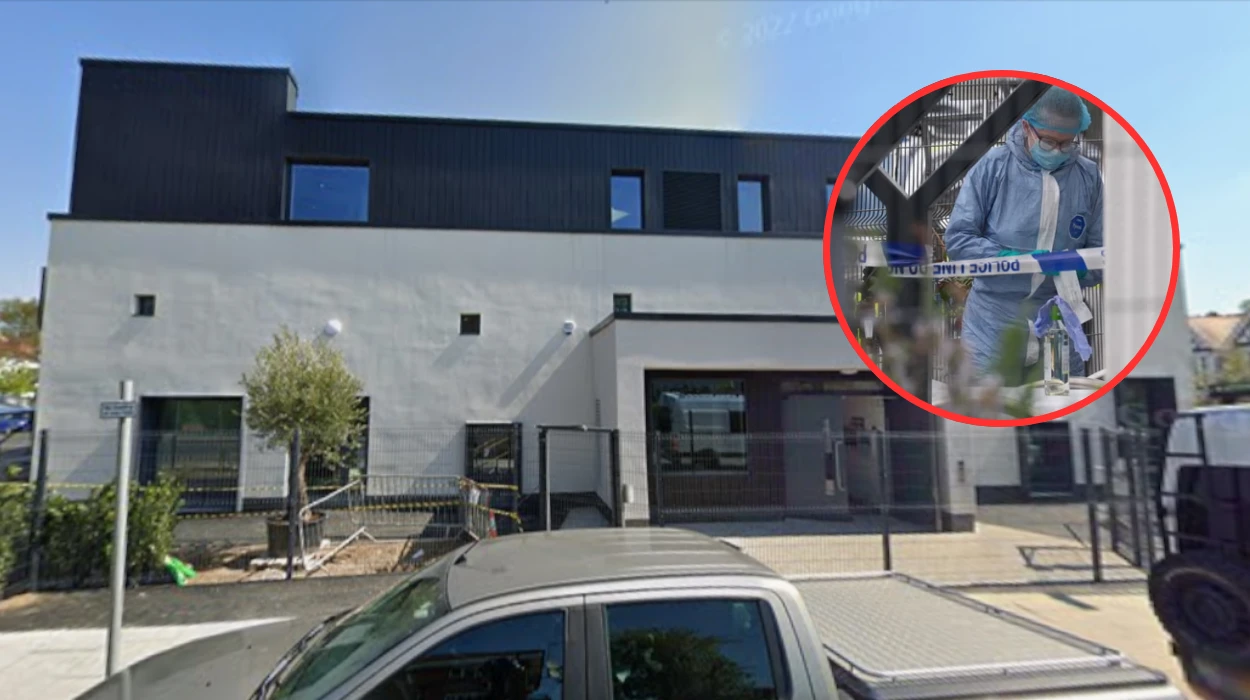
The attack unfolded shortly after midnight on Wednesday, April 15, 2026, at the Finchley Reform Synagogue located on Fallow Court Avenue in the Finchley neighbourhood of north London. As reported by the Metropolitan Police in an official statement, two individuals dressed in dark clothing and balaclavas approached the building and “threw two bottles suspected to contain petrol and a brick at the building.”
Fortunately, neither bottle ignited, resulting in no damage to the property and no injuries to anyone inside or nearby. Police confirmed this in their initial update, noting the bottles were placed near the synagogue entrance. A police forensics officer was later seen investigating the scene, as captured in photographs from the site.
As detailed by reporters at Asharq Al-Awsat, the incident prompted an immediate response from officers, who classified it as an antisemitic hate crime from the outset, with involvement from counter-terrorism detectives to probe potential motives and links.
Who Were the Suspects and How Were They Arrested?
On the same day as the attack, Wednesday, April 15, 2026, Metropolitan Police officers detained a 47-year-old woman and a 46-year-old man in Watford, a town north of central London. The pair were arrested on suspicion of arson with intent to endanger life and remain in custody as investigations continue.
Detective Chief Superintendent Luke Williams, who leads policing in the Barnet area—which encompasses Finchley—emphasised the rapid action in a statement:
“I hope the swift action by officers today to identify and arrest two people provides some reassurance and demonstrates how seriously we take attacks of this nature.”
Williams further added, as quoted by Fox News Digital reporter Greg Norman:
“We are aware of the significant concern that this incident will cause in the community, particularly in the wake of the arson attack in Golders Green last month. We are working with the affected synagogue and continuing to meet with community leaders.”
He also urged the public:
“If you have any CCTV, dash cam footage or information that could help officers please contact the police.”
Residents in the area can expect a heightened police presence over the coming days, with additional officers deployed to address community concerns.
Which Group Claimed Responsibility for the Attack?
A little-known extremist organisation called Harakat Ashab al-Yamin (HAYI), also referred to as Harakat Ashab al-Yamin al-Islamia, claimed responsibility for the attempted arson. According to the SITE Intelligence Group, which monitors extremist activity online, the group posted claims linking to this and similar incidents.
SITE Intelligence Group reported that HAYI has previously claimed attacks in Belgium, Britain, and the Netherlands. Police and analysts are examining possible Iranian connections, given the group’s profile and recent regional tensions, though no direct evidence has been publicly confirmed at this stage.
This claim surfaced amid broader investigations into whether a series of fires at Jewish sites in London might be linked to Iranian proxies, as noted in coverage by New York Post reporters.
What Is Known About HAYI’s Background?
HAYI is described across reports as an obscure group with a history of claiming low-level attacks on Jewish targets. Asharq Al-Awsat highlighted its possible Iran links, citing monitoring by extremism trackers. No further details on the group’s leadership or structure were provided in initial police statements, but counter-terror support indicates serious scrutiny.
Why Is This Being Treated as an Antisemitic Hate Crime?
The Metropolitan Police explicitly stated the incident is under investigation as an antisemitic hate crime, citing the targeting of a prominent synagogue in a Jewish-majority area like Finchley. Detective Chief Superintendent Luke Williams reiterated:
“I would like to reassure the community that we take incidents of this nature extremely seriously and detectives are working urgently to identify the suspects.”
This classification aligns with a national upsurge in antisemitic activity. The Community Security Trust (CST), a Jewish security organisation, recorded 3,700 instances of anti-Jewish hate across the UK in 2025, marking a 4% increase from 2024, though down from the peak in 2023.
ITV News coverage noted the CST’s involvement, emphasising community alarm over the synagogue targeting.
What Are the Related Incidents in Recent Months?
This attack follows a pattern of aggression against Jewish sites in the UK. Most notably, on March 23, 2026, four ambulances belonging to the volunteer Jewish emergency service Hatzola were deliberately set ablaze in a synagogue car park in Golders Green, north London. UK prosecutors have charged two men and a boy (aged 17, 19, and 20) in connection with that arson. Prime Minister Keir Starmer described it as an antisemitic attack at the time.
Earlier, on October 2, 2025—during the Jewish holy day of Yom Kippur—a deadly assault on a synagogue in Manchester killed two people and seriously injured three others, heightening anxiety in Jewish communities nationwide.
Additional context includes a foiled ISIS-inspired gun plot against a Jewish event in Manchester in February 2026, where two men received life sentences, and March 2026 court appearances by two Iranians accused of spying on London’s Jewish community for Tehran.
Fox News Digital’s Sophia Compton contributed details on these links, underscoring the pattern.
How Has the Community and Police Responded?
Police have ramped up patrols around Finchley and are liaising with synagogue leaders and the CST. Luke Williams affirmed ongoing meetings with community figures to provide reassurance.
The Finchley Reform Synagogue has not issued a public statement in available reports, but the incident has sparked widespread concern, as noted by GB News national reporter Charlie Peters, who reported live from the scene: “Two suspects are being pursued.”
Broader Jewish groups like the CST have called for vigilance amid the 4% rise in incidents.
What Is the Broader Context of Antisemitism in the UK?
The CST’s 2025 figures of 3,700 incidents reflect persistent challenges, influenced by global events including Middle East conflicts. Reports from LSE.co.uk (original story link) and others align on this trend, with no injuries in this case, but significant symbolic impact.
Investigations into Iranian ties—including arrests in Iran of alleged spies—add geopolitical layers, as covered by Tasnim news agency via Asharq Al-Awsat.